"I take to the open road, healthy, free, the world before me" ~ Walt Whitman
Three days until I leave for Japan! I can't believe how fast time has flown this summer. I've been saying goodbyes to family and friends over the last month, which has definitely been sad. But, I try to remember that it's not so much a goodbye as a "see you later." This year will be the longest I'll ever go without seeing my family, so I'm trying to get used to the fact that I wont have them close by. I'm really glad I got to have a solid two months after graduation to spend time with family and friends and enjoy Minnesota as much as I could.
Overall though, I'm really excited! I know this experience will have its ups and downs, but I'm excited for the chance to learn more about Japan, people in general, and myself (as cliche as that sounds). This is a once in a lifetime chance and I mean to make the absolute most of it. My next post will probably be coming to you from Japan!
Tuesday, July 24, 2012

Tuesday, July 17, 2012
Yasugi-shi, Shimane-ken!
As promised, this post will be all about my future home; Yasugi-shi, Shimane-ken. The suffix "shi" refers to the city and "ken" refers to the prefecture.


Shimane is a long and narrow prefecture along the Sea of Japan coast on the island of Honshu. It is considered rural, with the population of the entire prefecture being 724,000. Compare that to Tokyo's 13 million! The capital city is Matsue, with a population of about 200,000.
The city where I'll be living, Yasugi, is located on the northern most part of the prefecture and is right on the border with Tottori Prefecture.

Yasugi is right next to Lake Nakaumi, a large brackish lake that is connected to the ocean by a channel. Nakumi literally means "middle sea" in Japanese. Lake Nakaumi is the 5th largest lake in surface area in Japan. There is also another large lake connected to Nakaumi called Lake Shinji. After living for 4 years in Madison between two big lakes, what are the chances of living so close to two lakes once again?
The lake on the right is Nakumi and the left is Shinji.

\Yasugi is a city of about 42,000 people and is about 260 square miles (420 square kilometers... gotta get used to that metric system!). According to my welcome letter from the Board of Education I'll be working for, Yasugi is known for its iron manufacturing. Yasugi actually consists of three towns, Hakuta, Hirose, and Yasugi, that were incorporated to make Yasugi city in 2004. Each town has a municipal JET who works at the towns elementary schools and junior highs, and there is one prefectural JET who works at the high schools in Yasugi. So a JET population of 4, not bad!
I've been lucky enough to be in contact with my predecessor and she has been seriously awesome. I have so many questions about where I'll be living, and the schools and pretty much everything and she has answered all my questions in great detail. Super awesome girl! I feel really lucky because some JETs hear only the minimum from their predecessor or not at all. Here are just a few things I've learned from her about what my life will be like.
1. The three municipal JETs share the five junior highs and seventeen (!!!) elementary schools in Yasugi. I'lle be teaching at two junior highs and five elementary schools each week. At elementary, I'll only be teaching 5th and 6th grade, and junior high will be all levels. It sounds like I'll be switching schools in the middle of the day on some days and others I'll be at the same school all day. It'll certainly be busy but I'm really looking forward to having a busy schedule. The schools range in size too so it'll be interesting to see what working with different class sizes will be like. The thing I'm most nervous about is trying to remember all those kids names!
2. My apartment is fairly new and looks really nice! My predecessor sent me some pictures; one big room, with a kitchen and bathroom off to the side. I also have a balcony with a nice view of a rice field and some houses. It looks rural for sure, but beautiful!
3. I will most definitely be getting a car within the first few days of getting there. Yasugi is just too spread out to bike or walk. While I'm excited about the freedom having a car will bring, I'm a little nervous about driving on the other side of the road. We'll see how that goes.
4. Yasugi is rural, but it still has pretty much everything I need! There are some beautiful attractions, including the Adachi Museum of Art which has a beautiful garden.
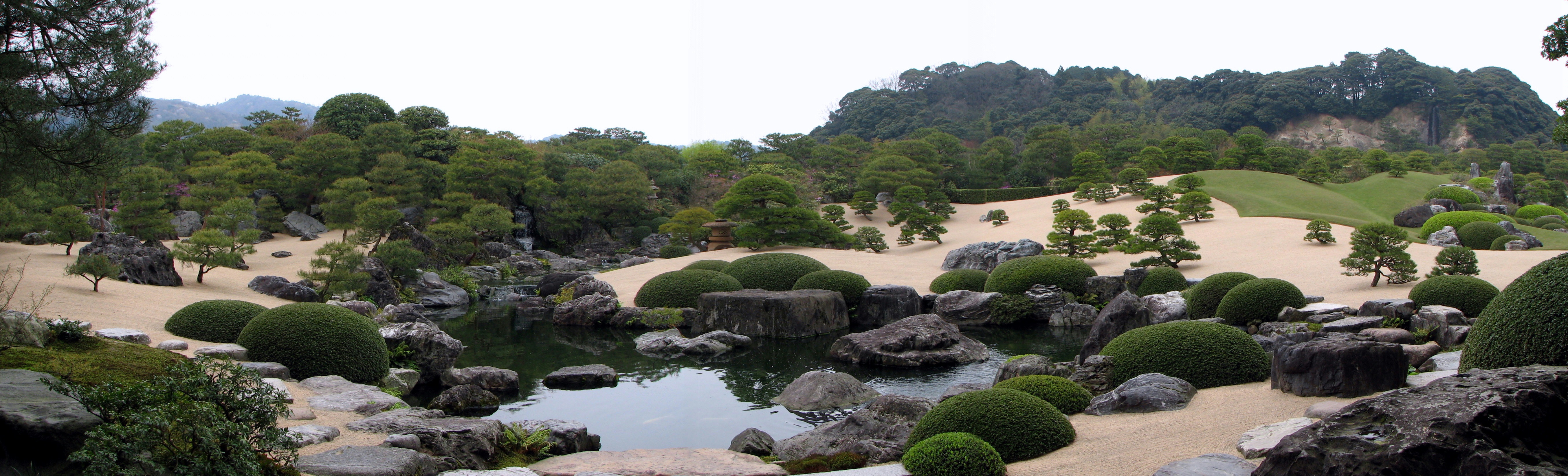
There are also restaurants and hot springs (three!) in the city. I'll definitely take advantage of those! I'm also really looking forward to enjoying Lake Nakaumi... walking, running, maybe even some canoeing if I can find it.
I'll repost this link to some beautiful pictures that other Shimane JETs have taken of the prefecture. You have to scroll down the page a bit to see them. I'm looking forward to taking my own!
Tuesday, June 26, 2012
The Long Road to Japan (Part 2)
After my interview was over, I knew I would have about a month and a half to wait before I heard the results of the interviews. I tried my best to put JET out of my head but it definitely wasn't easy. I remember thinking about the hypothetically about the future a lot; "If I get into JET..." or "If I don't get into JET." So thankfully, I was really relieved in early April when I knew I would be hearing the results soon.
On April 9th, I read on the JET Program official forums that most of the embassies in the U.S. would be announcing the results of who got in the next day. Needless to say, on the 10th I was one big mess of nerves and checked my email fairly constantly, even during class. When I finally got the email, I was sitting in my Japanese class and could barely contain my excitement. The email informed me that I'd been accepted as an ALT into the Program. Needless to say, I was pretty elated!
Once I found out I had gotten in, there were several things I needed to do before I would leave for Japan. Most of these things are done, but I'm still working on a few of them.
1. FBI Background check
2. IRS forms for tax purposes
4. Physical and TB test (glad I didn't have that!)
5. Proof of graduation from a college or university
6. Medication import forms (to bring medication to Japan)
7. International Drivers Permit (these are awesome if you ever need to drive in another country, by the way; they're $15, take ten minutes to get, and are good for a year. Driving on the other side of the road though doesn't sound quite as easy!
8. Visa application
9. Renounce my Japanese citizenship. I have had dual citizenship with the U.S. and Japan since I was born because I was born in the U.S. but my mom was not yet a U.S. citizen at the time of my birth. In order to participate in JET, people with dual citizenship must renounce their Japanese citizenship to avoid tricky visa problems. In my type of situation (people with dual citizenship from birth), people must choose one citizenship or the other before they turn 22. Because I turned 22 in June, renouncing my Japanese citizenship is something that I would have had to do anyway, so it wasn't a big deal. It was probably the most difficult thing on this list to pull off, however, because renouncing citizenship requires you to go to the consulate in Chicago in person to fill out the paperwork. Also, all of that paperwork is in Japanese which means I definitely needed a fluent speaker to come along with me to help me decipher everything. Thankfully, my mom needed to go to Chicago for a amateur piano competition so stopping into the consulate wasn't too much of an ordeal. I would have had no idea what any of the paperwork said without my mom there, so I was really grateful that she was there!
After I found out I got into JET, I waited another month and half to hear about my placement. The anticipation was killing me.

On April 9th, I read on the JET Program official forums that most of the embassies in the U.S. would be announcing the results of who got in the next day. Needless to say, on the 10th I was one big mess of nerves and checked my email fairly constantly, even during class. When I finally got the email, I was sitting in my Japanese class and could barely contain my excitement. The email informed me that I'd been accepted as an ALT into the Program. Needless to say, I was pretty elated!
Once I found out I had gotten in, there were several things I needed to do before I would leave for Japan. Most of these things are done, but I'm still working on a few of them.
1. FBI Background check
2. IRS forms for tax purposes
4. Physical and TB test (glad I didn't have that!)
5. Proof of graduation from a college or university
6. Medication import forms (to bring medication to Japan)
7. International Drivers Permit (these are awesome if you ever need to drive in another country, by the way; they're $15, take ten minutes to get, and are good for a year. Driving on the other side of the road though doesn't sound quite as easy!
8. Visa application
9. Renounce my Japanese citizenship. I have had dual citizenship with the U.S. and Japan since I was born because I was born in the U.S. but my mom was not yet a U.S. citizen at the time of my birth. In order to participate in JET, people with dual citizenship must renounce their Japanese citizenship to avoid tricky visa problems. In my type of situation (people with dual citizenship from birth), people must choose one citizenship or the other before they turn 22. Because I turned 22 in June, renouncing my Japanese citizenship is something that I would have had to do anyway, so it wasn't a big deal. It was probably the most difficult thing on this list to pull off, however, because renouncing citizenship requires you to go to the consulate in Chicago in person to fill out the paperwork. Also, all of that paperwork is in Japanese which means I definitely needed a fluent speaker to come along with me to help me decipher everything. Thankfully, my mom needed to go to Chicago for a amateur piano competition so stopping into the consulate wasn't too much of an ordeal. I would have had no idea what any of the paperwork said without my mom there, so I was really grateful that she was there!
After I found out I got into JET, I waited another month and half to hear about my placement. The anticipation was killing me.
Prefecture: 島根県 Shimane-ken
Contracting Organization: 安来市 Yasugi-shi
When I first found out, I was pretty surprised. Because I had no idea where Shimane Prefecture was and also because it wasn't one of the three prefectures I requested. As much as I heard that many applicants don't get any of their preferred prefectures, I also heard that many JETs get their first choice prefecture. I had requested prefectures that I thought might not be very popular, but I guess I was wrong! Anyway, I did a quick Google search and found out where Shimane was. It turns out, it's just to the north of my 3rd choice preference, Okayama Prefecture.
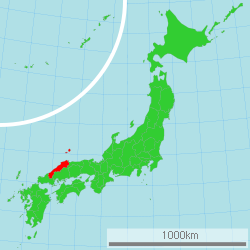
After skimming the Wikipedia article I was a little freaked out. Shimane is the 2nd least populated prefecture in Japan, after its next-door neighbor, Tottori. It also has the highest ratio of centenarians to the general population out of any prefecture in Japan. Party with the old folks!
But the more I've read about Shimane and my city, Yasugi particularly, and the more the current JETS in the area have told me about, the more I've gotten incredibly excited to go and live in this beautiful place!
Here are some pictures of Shimane taken by current JETS. I plan to write another post all about Yasugi and Shimane where I go into more detail so stay tuned for that!
Sunday, June 17, 2012
The Long Road to Japan (Part 1)
As I said in the previous post, the JET Program is all about waiting; waiting to see if you got an interview, waiting for notification of actually being accepted, waiting for your placement to come, and many others. There's also a lot of paperwork, more than I've ever had to fill out for anything, really. But in the end, it's all worth it to know you will actually get to live in Japan, interact with Japanese people on a daily basis, and generally just have an awesome adventure :) Here's a run-down of what I've done for JET in the past six months or so. I'm sure most people probably don't care much about this, but for anyone who thinks they might be interested in doing JET, I'll try to give you a decent picture of what's in store for you (in a slightly haphazard manner :)
October and November 2011: The JET application became available in late October with a deadline of December 2nd. There are several components to the application: A general application asking about your background, as well as any teaching experience you have; a statement of purpose, which is a two page essay where you must write not only why you want to do the Program and what you can bring to the table, but also about your personal interests and motivations for going to Japan (a lot to pack into two pages); two letters of reference from employers or professors; and other random stuff like college transcripts and a medical history questionnaire.
Essentially, anyone can apply for JET who is a graduate of a four-year university or college and can speak English fluently. But in order to actually make it in to the program, you've got to beat out some fierce competition and that means making yourself appear as professional, able, and personable as possible both on paper and in your interview. I can safely say that I never thought over and revised any writing assignment I had in college more than my statement of purpose essay. I spent a good three weeks writing and revising the two-page, double-spaced essay and asked family members, friends, professors, and tutors at my college's writing center to read it and tell me what they thought. After all that work, it was probably the best thing I have ever written or ever will write :) Even so, people with awesome applications and essays get rejected every year simply because someone else had just a little bit more to offer than them. So it's essential to make yourself stand out (in a good way) as much as possible.
November 25th 2011: I mailed my application to the JET Program offices in Washington D.C.! It was such a great feeling to have it done with, although I did spend the next week worrying that it wouldn't get there before the deadline. Another random thing about applying for JET: I've been to the post office more in the last 6 months than I probably have in my entire life. Just goes along with the process!
February 2nd 2012: After 2 months or so, I got an email notifying me that I advanced to the second stage of the application process- the interview. I was so incredibly excited when I found out- my hands were shaking!
Over the next few weeks I prepared for the interview as much as I could by writing out answers to questions that I knew I would most likely be asked, and practising with friends and teachers. It definitely helped me for the real thing!
February 25th 2012: I interviewed for the ALT (Assistant Language Teacher) position in Chicago (the nearest Japanese consulate to me up in Wisconsin) on a cold Saturday. It was a long day, as I took the round-trip bus from Madison- about 8 hours total. Before the interview, I got a chance to talk to some other hopeful JETs in the waiting room and it definitely helped to calm my nerves and relax. Another thing that took the edge off was the pep-talk we received from a couple of the former JETS who were in charge of making sure the interviews ran smoothly. One of them gave us a short talk saying it wouldn't be as bad as we were thinking and to just try our best. Then she made us jump up and down and get pumped up before we went in. The other guy even did a couple somersaults on the floor in front of us to get us laughing. It definitely worked! I felt pretty relaxed and confident going into the interview.
The interview went pretty well, as far as I could tell. Each applicant interviews with three people affiliated with either the program or with the local Japanese community. It lasts about 20 minutes. My interview panel consisted of two former JETS and a woman who's job I'm not sure of but who conducted the Japanese portion of my interview. The interview went much like any other job interview, I think (I haven't had many at this point). The two former JETS (both young guys in their 20s) asked me about why I wanted to do the program and why I wanted to go to Japan. They asked me about my tutoring experiences and how I would handle hypothetical situations in the classroom. Also, they asked about my placement requests (each applicant can request whether they would like to live in a rural, suburban, or urban setting and they can also request up to 3 prefectures they would like to live in). I requested a suburban placement and my prefecture requests were Hyogo, Wakayama, and Okayama. I requested these three because they are all prefectures with some coastline (I was hoping for somewhere near the ocean), in the southern region of the country, and close to Osaka, where much of my mom's family lives. My first choice was Awaji-shima in Hyogo Prefecture. Awaji-shima is a beautiful island that connects two of the main islands of Japan, Honshu and Shikoku. I went there for a short trip once with my family and it was absolutely beautiful. But of course, I would have been happy going anywhere!

The other interviewer, a Japanese woman, asked me some questions in Japanese at the end of the interview. This isn't done to gather information from the interviewee but rather to see what their Japanese speaking ability is. Some JETS are also asked to read a short paragraph aloud in their interview. Japanese is not required at all to do the JET Program (probably should have mentioned that earlier haha) but your Japanese ability or lack thereof is used to determine your placement. After all, someone who doesn't speak any Japanese probably shouldn't be put in a tiny town with no other foreigners or fluent English-speakers in it. Anyway, she asked me some fairly easy questions; clarifying that my mom is Japanese and asking where she is from, asking me whether I think I'll make a good teacher, and asking me why I chose Awaji-shima in Hyogo Prefecture as my first preferred placement. Overall pretty easy questions, but I tend to get easily flustered when speaking in Japanese so sometimes easy words or phrases completely escape me. But I did alright and just tried to keep a smile on my face the whole time.
One random question that they asked me was what three things I would take with me to represent American culture. I had looked over lists of potential JET interview questions like this and had actually prepared an answer to this particular one (Thank God! Otherwise I probably would have stammered out some ridiculous answer). The first item I said was a large map of the United States that perhaps had pictures of food and culture connected to particular regions so that the kids could see how diverse America really is. Then I said I would try and give more specific examples from the states I've spent most of my time in, Minnesota and Wisconsin. For Wisconsin, I said I would bring a stuffed Bucky Badger. Bucky is the mascot of my college, UW-Madison (represent!) but is also a symbol of the Badger State pride that Wisconsin has.

Finally, I said my third item would be a picture of the Minnesota State Fair as it is a really big deal in our state and represents our state's culture.

Then one of the interviewers asked "How does it symbolize Minnesota culture?" I wasn't really expecting that so I sort of stumbled over the answer (in truth, I was thinking that it's just an excuse for people to stuff themselves silly on food-on-a-stick. Which it is, and it's amazing). I said something like "It's one of the largest state fairs in the country and is just a good opportunity for people to come together over food and community and just have a good time. Minnesota is a big agricultural state so the fair displays a lot of that in its exhibits." Then I tried to explain the Princess Kay of the Milky Way butter sculptures. For those of you who don't know, Princess Kay is the winner of the Minnesota Dairy Princess Program put on by the Minnesota Dairy Association (stole that straight from Wikipedia). One of the traditions at the State Fair is that all of the Princess Kay contestants and the winner have their faces carved into huge butter blocks. The have to sit in these huge coolers for hours to pose for the sculptures and fair-goers can go watch. It's pretty cool.

Anyway, back to the interview. I tried to explain the Princess Kay and how carving her likeness into butter is just a cool cultural representation of the agriculture of our state. Of course, my real answer was nowhere near that smooth and after realizing that my interviewers were staring at me with amused looks on their faces, I realized how ridiculous a face sculpted into butter must sound to someone who hasn't seen it. Besides that little hiccup though, the interview went great!
Wow that was a long post! I think I'll split this us up into two posts... stay tuned to hear about my acceptance into JET, my placement, and all the preparations I've done so far to get ready to leave!
October and November 2011: The JET application became available in late October with a deadline of December 2nd. There are several components to the application: A general application asking about your background, as well as any teaching experience you have; a statement of purpose, which is a two page essay where you must write not only why you want to do the Program and what you can bring to the table, but also about your personal interests and motivations for going to Japan (a lot to pack into two pages); two letters of reference from employers or professors; and other random stuff like college transcripts and a medical history questionnaire.
Essentially, anyone can apply for JET who is a graduate of a four-year university or college and can speak English fluently. But in order to actually make it in to the program, you've got to beat out some fierce competition and that means making yourself appear as professional, able, and personable as possible both on paper and in your interview. I can safely say that I never thought over and revised any writing assignment I had in college more than my statement of purpose essay. I spent a good three weeks writing and revising the two-page, double-spaced essay and asked family members, friends, professors, and tutors at my college's writing center to read it and tell me what they thought. After all that work, it was probably the best thing I have ever written or ever will write :) Even so, people with awesome applications and essays get rejected every year simply because someone else had just a little bit more to offer than them. So it's essential to make yourself stand out (in a good way) as much as possible.
November 25th 2011: I mailed my application to the JET Program offices in Washington D.C.! It was such a great feeling to have it done with, although I did spend the next week worrying that it wouldn't get there before the deadline. Another random thing about applying for JET: I've been to the post office more in the last 6 months than I probably have in my entire life. Just goes along with the process!
February 2nd 2012: After 2 months or so, I got an email notifying me that I advanced to the second stage of the application process- the interview. I was so incredibly excited when I found out- my hands were shaking!
Over the next few weeks I prepared for the interview as much as I could by writing out answers to questions that I knew I would most likely be asked, and practising with friends and teachers. It definitely helped me for the real thing!
February 25th 2012: I interviewed for the ALT (Assistant Language Teacher) position in Chicago (the nearest Japanese consulate to me up in Wisconsin) on a cold Saturday. It was a long day, as I took the round-trip bus from Madison- about 8 hours total. Before the interview, I got a chance to talk to some other hopeful JETs in the waiting room and it definitely helped to calm my nerves and relax. Another thing that took the edge off was the pep-talk we received from a couple of the former JETS who were in charge of making sure the interviews ran smoothly. One of them gave us a short talk saying it wouldn't be as bad as we were thinking and to just try our best. Then she made us jump up and down and get pumped up before we went in. The other guy even did a couple somersaults on the floor in front of us to get us laughing. It definitely worked! I felt pretty relaxed and confident going into the interview.
The interview went pretty well, as far as I could tell. Each applicant interviews with three people affiliated with either the program or with the local Japanese community. It lasts about 20 minutes. My interview panel consisted of two former JETS and a woman who's job I'm not sure of but who conducted the Japanese portion of my interview. The interview went much like any other job interview, I think (I haven't had many at this point). The two former JETS (both young guys in their 20s) asked me about why I wanted to do the program and why I wanted to go to Japan. They asked me about my tutoring experiences and how I would handle hypothetical situations in the classroom. Also, they asked about my placement requests (each applicant can request whether they would like to live in a rural, suburban, or urban setting and they can also request up to 3 prefectures they would like to live in). I requested a suburban placement and my prefecture requests were Hyogo, Wakayama, and Okayama. I requested these three because they are all prefectures with some coastline (I was hoping for somewhere near the ocean), in the southern region of the country, and close to Osaka, where much of my mom's family lives. My first choice was Awaji-shima in Hyogo Prefecture. Awaji-shima is a beautiful island that connects two of the main islands of Japan, Honshu and Shikoku. I went there for a short trip once with my family and it was absolutely beautiful. But of course, I would have been happy going anywhere!

The other interviewer, a Japanese woman, asked me some questions in Japanese at the end of the interview. This isn't done to gather information from the interviewee but rather to see what their Japanese speaking ability is. Some JETS are also asked to read a short paragraph aloud in their interview. Japanese is not required at all to do the JET Program (probably should have mentioned that earlier haha) but your Japanese ability or lack thereof is used to determine your placement. After all, someone who doesn't speak any Japanese probably shouldn't be put in a tiny town with no other foreigners or fluent English-speakers in it. Anyway, she asked me some fairly easy questions; clarifying that my mom is Japanese and asking where she is from, asking me whether I think I'll make a good teacher, and asking me why I chose Awaji-shima in Hyogo Prefecture as my first preferred placement. Overall pretty easy questions, but I tend to get easily flustered when speaking in Japanese so sometimes easy words or phrases completely escape me. But I did alright and just tried to keep a smile on my face the whole time.
One random question that they asked me was what three things I would take with me to represent American culture. I had looked over lists of potential JET interview questions like this and had actually prepared an answer to this particular one (Thank God! Otherwise I probably would have stammered out some ridiculous answer). The first item I said was a large map of the United States that perhaps had pictures of food and culture connected to particular regions so that the kids could see how diverse America really is. Then I said I would try and give more specific examples from the states I've spent most of my time in, Minnesota and Wisconsin. For Wisconsin, I said I would bring a stuffed Bucky Badger. Bucky is the mascot of my college, UW-Madison (represent!) but is also a symbol of the Badger State pride that Wisconsin has.

Finally, I said my third item would be a picture of the Minnesota State Fair as it is a really big deal in our state and represents our state's culture.

Then one of the interviewers asked "How does it symbolize Minnesota culture?" I wasn't really expecting that so I sort of stumbled over the answer (in truth, I was thinking that it's just an excuse for people to stuff themselves silly on food-on-a-stick. Which it is, and it's amazing). I said something like "It's one of the largest state fairs in the country and is just a good opportunity for people to come together over food and community and just have a good time. Minnesota is a big agricultural state so the fair displays a lot of that in its exhibits." Then I tried to explain the Princess Kay of the Milky Way butter sculptures. For those of you who don't know, Princess Kay is the winner of the Minnesota Dairy Princess Program put on by the Minnesota Dairy Association (stole that straight from Wikipedia). One of the traditions at the State Fair is that all of the Princess Kay contestants and the winner have their faces carved into huge butter blocks. The have to sit in these huge coolers for hours to pose for the sculptures and fair-goers can go watch. It's pretty cool.

Anyway, back to the interview. I tried to explain the Princess Kay and how carving her likeness into butter is just a cool cultural representation of the agriculture of our state. Of course, my real answer was nowhere near that smooth and after realizing that my interviewers were staring at me with amused looks on their faces, I realized how ridiculous a face sculpted into butter must sound to someone who hasn't seen it. Besides that little hiccup though, the interview went great!
Wow that was a long post! I think I'll split this us up into two posts... stay tuned to hear about my acceptance into JET, my placement, and all the preparations I've done so far to get ready to leave!
Tuesday, June 5, 2012
An Introduction and Youkoso! (Welcome!)
Hi there! Welcome to my blog and thanks for reading my first-ever blog post. I've never blogged before and it feels a bit strange to put my thoughts on display like this, but as my time in Japan will be filled with new experiences, I figure I might as well get used to it!

The JET Program (JET stands for Japan Exchange and Teaching, by the way) was something I first heard about in high school from my Japanese teacher. At the time, it seemed like a cool opportunity, but I wasn't thinking about my plans after college at all so JET went to the back of my mind for quite a while. In college I took Japanese classes again and rediscovered my interest in JET. I had heard from some of my friends and teachers who had been on JET or knew people who had about how JET was a great opportunity for people interested in Japan, kids, and teaching. At first, the idea of being a teacher scared me quite a bit, but after learning more about the program and also doing various tutoring and volunteer work with kids, I started to think that I would probably enjoy teaching quite a bit.

The JET Program (JET stands for Japan Exchange and Teaching, by the way) was something I first heard about in high school from my Japanese teacher. At the time, it seemed like a cool opportunity, but I wasn't thinking about my plans after college at all so JET went to the back of my mind for quite a while. In college I took Japanese classes again and rediscovered my interest in JET. I had heard from some of my friends and teachers who had been on JET or knew people who had about how JET was a great opportunity for people interested in Japan, kids, and teaching. At first, the idea of being a teacher scared me quite a bit, but after learning more about the program and also doing various tutoring and volunteer work with kids, I started to think that I would probably enjoy teaching quite a bit.
I’ll give a little rundown of JET for those who aren’t
familiar with it. The JET Program started in 1987 as a cultural exchange
between people from English-speaking countries and Japanese students and educators.
The program is run by the Japanese government and the participants are
hired as teachers by their individual prefectures or Boards of Education. More than 50,000 people from over 50 different countries have participated in the program since it began. The main countries that send JETs are the USA, the UK, Canada, Australia, New Zealand, Ireland, and South Africa but pretty much anyone from any country who is fluent in English can apply. JET is extremely competitive and applicants must prove themselves in an extensive written application as well as an in-person interview. Knowing how many people apply for this program each year and are not accepted makes me feel incredibly lucky to have this opportunity.
Applying for JET is essentially just one big waiting game. Here is a timeline of the application and acceptance process. As you can see, you have to start preparing almost a year in advance. But as this is an incredible opportunity and moving abroad does take a lot of careful preparation, it definitely makes sense. I secretly think that the process is meant to teach you patience that you will likely need in the classroom and in living in Japan as a foreigner in general.
Late September Application Process Begins
Mid October Early Applications Accepted
Late November Application Deadline (Varies by Country)
January 1st Notice Sent to Applicants
February Interviews Held at Japanese Embassies/Consulates
Late March Interview Results Sent to Tokyo
April 2nd Notice Sent to Applicants (Successful applicants are notified)
May Submit Health Check and Reply Forms
May-August Successful Applicants Receive Notification
May-July Sucessful Applicants Receive Placement Information
July Pre-Departure Orientation
July/August Departure on Designated Day
Tokyo Orientation
I am getting ready to leave for Japan on July 28th...
time is flying by and I still have a lot to do, but I'm trying to enjoy my time
with family and friends as much as possible before I leave. I'll be writing posts about my placement in Japan and also a little more detail about the application process as well as what happens once you are accepted. Until next time!
Subscribe to:
Posts (Atom)